
 US
US
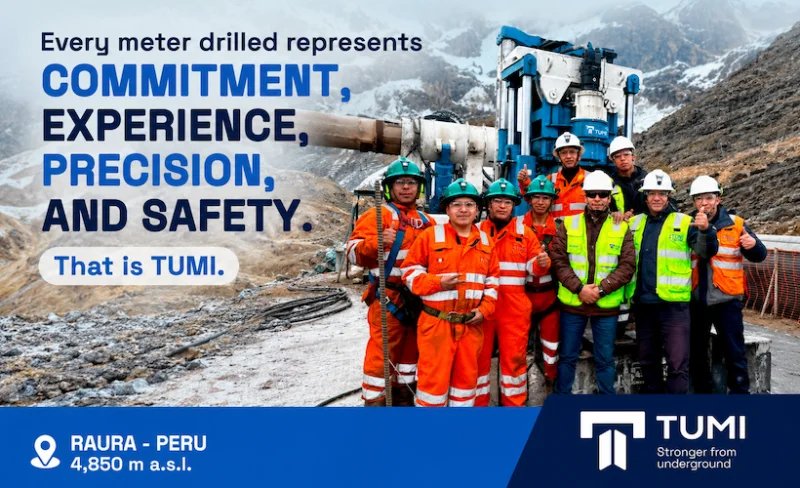

In the context of underground mining, the execution of raise boring projects in Peru represents a significant technical challenge, particularly when these are carried out in high-altitude environments and complex geological conditions.
This case describes the drilling of a main ventilation shaft at the Raura mining unit, located at 4,850 meters above sea level, considered one of the largest projects of its kind nationwide.
Project Scope and Characteristics
The project aimed to construct a main ventilation shaft, essential for the operation and expansion of the mine.
Main specifications:
-
Location: Raura, Peru
-
Altitude: 4,850 meters above sea level
-
Length: 410 meters
-
Diameter: 4.3 meters
-
Method: Raise Boring
These characteristics position the project among the most relevant developments in vertical drilling for underground mining in the country.
Operational Conditions
The project was executed under particularly demanding conditions, requiring a high level of technical and operational specialization.
Altitude and Environment
Operating at extreme altitude involved challenges related to equipment performance, logistics, and workforce working conditions.
Weather Conditions
The project was exposed to adverse weather events, including snowfall, constant precipitation, and low temperatures, factors that directly impacted operational planning and continuity.
Geological Complexity
The rock mass presented highly challenging characteristics:
-
Presence of hard and fractured rock
-
Geomechanical classification RMR IVA, IVB, and V
-
Variability in ground stability
Technical Challenges
The nature of the project involved managing multiple critical variables, including:
Drilling Precision
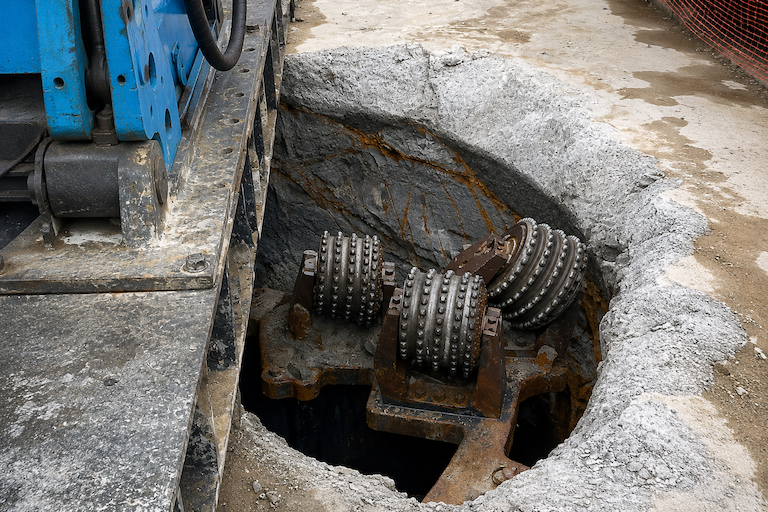
One of the main challenges was ensuring minimal deviation in the pilot drilling, an essential condition to guarantee the proper execution of the raise.
Operational Adaptability
Geological conditions required continuous adjustments to drilling parameters as well as intervention strategies.
Multidisciplinary Coordination
Efficient project execution required permanent integration among engineering, operations, safety, and maintenance teams.
Applied Technology
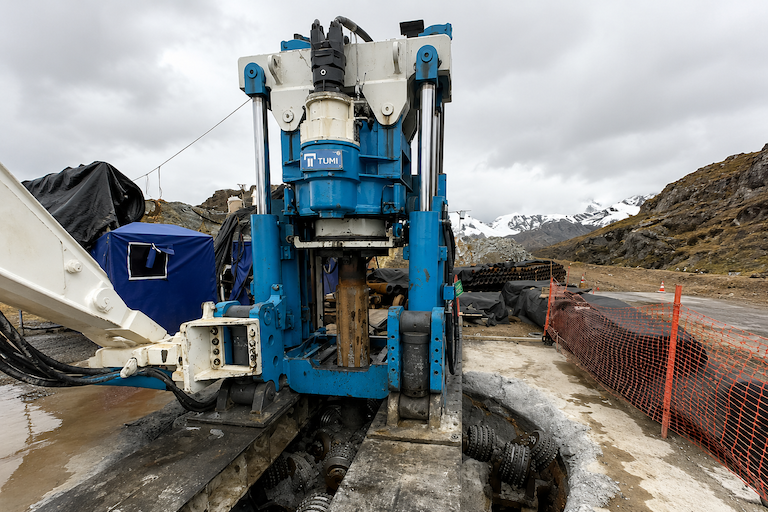
The project utilized equipment specifically designed for high-demand operations.
Main Equipment
-
Equipment: SBM800 series 086
-
Manufacturer: TUMI
-
Power: 400 HP
-
Capacity: up to 6 meters drilling diameter
Monitoring and Control Systems
-
Implementation of a Data Logger system for recording operational variables
-
Integration of control sensors under TUMI standards
-
Continuous monitoring of critical parameters during operations
Key Differentiating Factors in Execution
The project development relied on key capabilities that ensured successful execution:
-
Real-time technical adaptation to geological variations
-
Timely response capability to operational deviations
-
Effective integration of multidisciplinary teams
One of the main challenges was maintaining precision under demanding geological conditions. Achieving minimal deviation in the pilot drilling, within a hard and highly fractured rock environment, required highly coordinated work,” says Julio Segura, Operations Manager at TUMI.
Impact on Mining Operations
The execution of this project directly contributes to:
-
Optimizing the mine ventilation system
-
Facilitating the expansion of underground operations
-
Improving safety conditions and operational efficiency
The project developed in Raura stands as a benchmark in the execution of raise boring solutions under extreme conditions, demonstrating TUMI’s ability to integrate technology, technical expertise, and operational management in highly complex environments.
 Mexico
 Peru
Peru Brazil
 Zambia